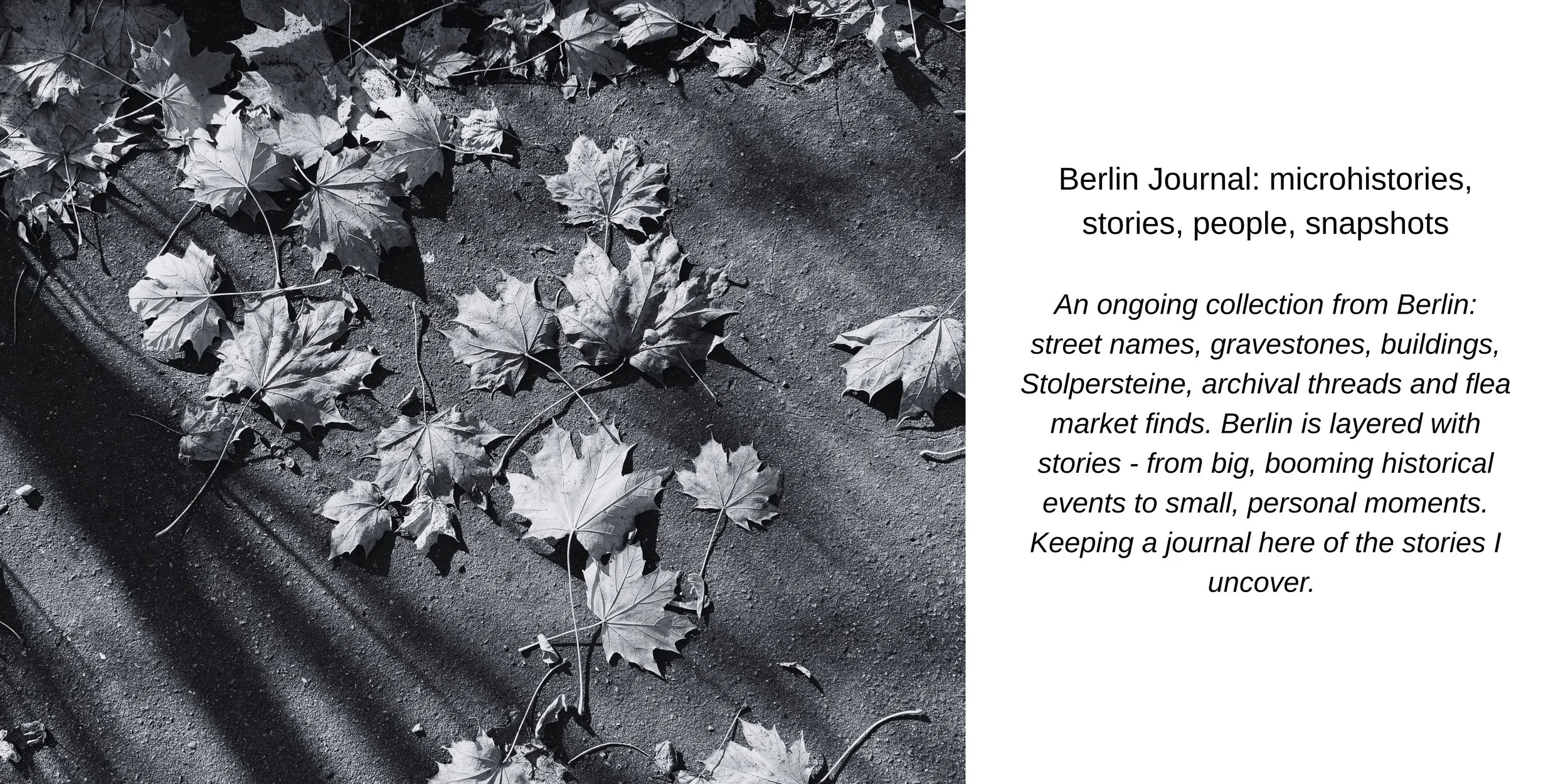
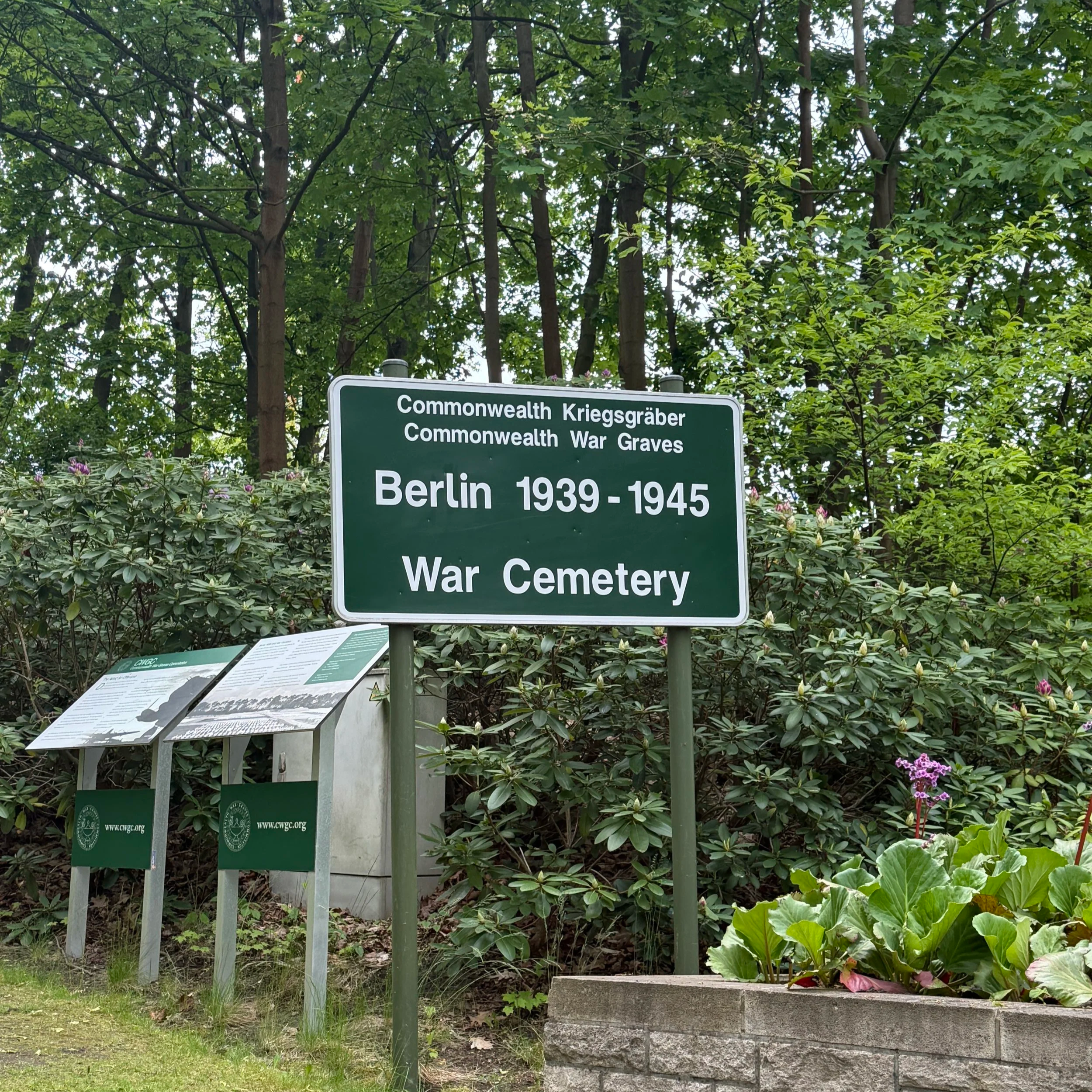
My son and I recently took a walk through the Commonwealth War Cemetery in Berlin. When I lived in Hamburg I’d visited the bigger one there a couple of times and become interested in the stories of the men there (boys, many of them). The bombings of Hamburg are well known and many of these graves were of pilots, navigators, gunners. Berlin felt a little different.
We wandered beneath the tall chestnut trees and talked about the different insignia on the graves. Men from Scotland, Australia, India, the United Kingdom and New Zealand. We took some photos, talked about their ages and their roles in the war, and noticed that many were grouped by death date. I took photos of some of the New Zealanders to look up where they were from and how they got there, and then the gravestone of a Maori soldier caught my eye. What was his story?
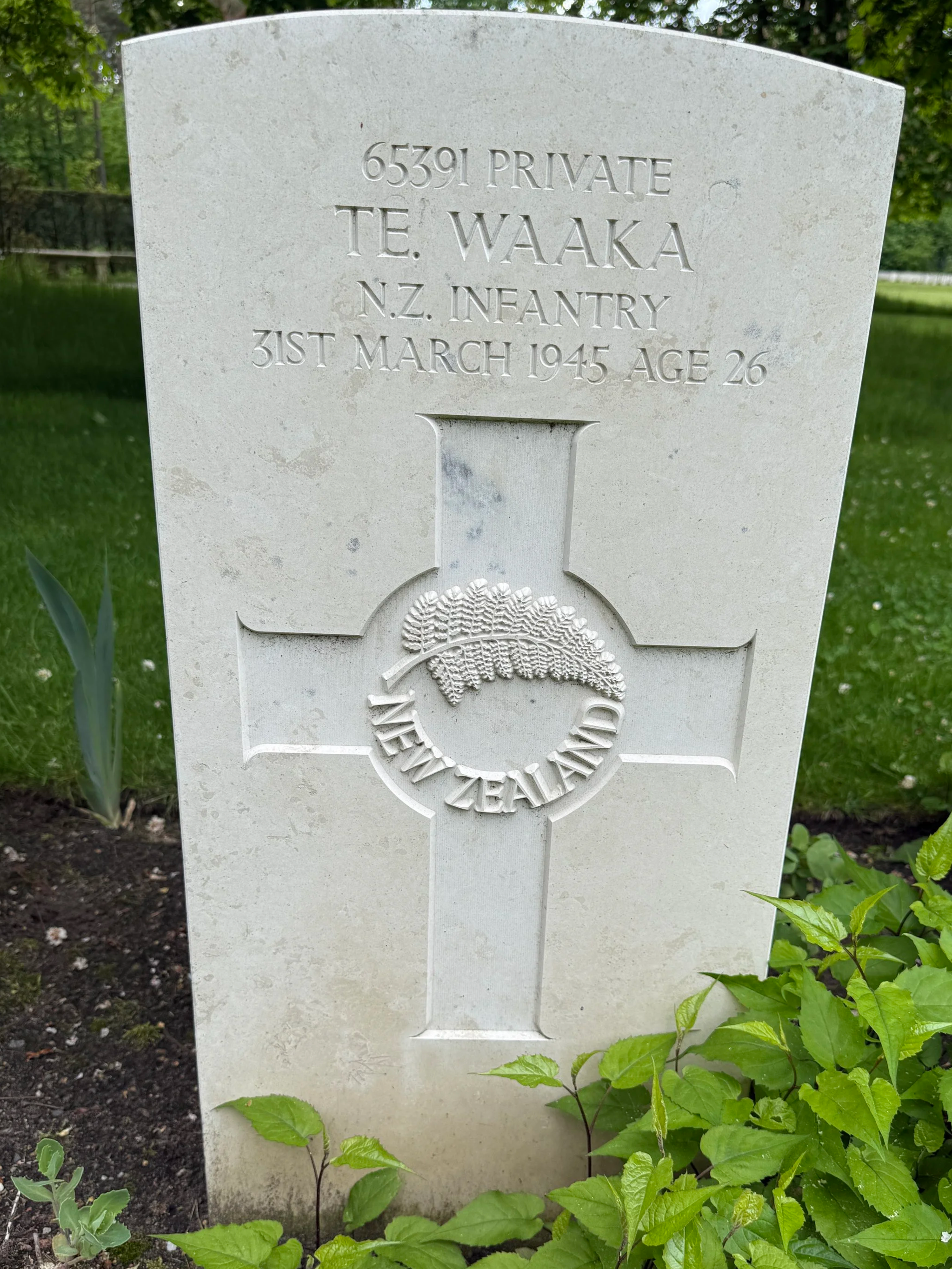
Here’s what I found out:
Te Maaka Waaka was born on the Arowhenua Marae, Temuka, in the South Island of New Zealand in December 1918. He had five older siblings and, sadly, his father died of influenza a month before his birth. In the death notice, his father was described as “a big man, of strong physique, and a prominent figure in the town and district, taking part in the tugs-of-war, etc.” I don’t know how his mother fared with six small children in the 1920s but she would have had community support. Waaka went to the local school and then when he was around twenty years old, went north to work in the Taumaranui area for a sawmill company, a job he described in his Army enlistment papers as ‘bushman’.
Waaka joined the Maori Battalion in 1941, at twenty three years old. The 28th (Maori) battalion in New Zealand had been formed in the beginning of 1940 as a part of the 2nd New Zealand Expeditionary Force (2NZEF) and had embarked by ship on 1st May 1940. They spent over six months in Great Britain, training and assisting with readiness efforts to repel a German invasion, before arriving in Egypt in March 1941, the Greek mainland later that month, and then Crete in April.
Waaka would have undergone some training in New Zealand before joining the battalion, and most likely sailed from Wellington on 7th April 1941.
Crete was a disaster for the combined forces of British, Australian, New Zealand, Palestinian and Greek soldiers - the Germans attacked by air on 20th May, sending in thousands of paratroopers. The Battalion diary describes the fighting in Crete. During this time the Maori soldiers become well known for their skill at close combat bayonet fighting. The Allies retreated southwards and after twelve days and very heavy losses, the New Zealanders returned to Egypt. It’s likely Waaka met them there, part of much needed reinforcements.
FromJune to December 1941 the battalion were in Egypt, training intensely, involved in small raids and battles and reinforcing roads and defensive areas. You can see here a brilliant photo of some of the Maori battalion cheering at an athletics meet, in Cairo, August 1941.
From December 1941 - June 1942 they were in Syria, training, resting, building roads, preparing for a possible German invasion down through Turkey.
In June 1942, the Māori Battalion, with the rest of the New Zealand troops, returned to Egypt as Axis forces under Rommel advanced east across North Africa. Allied leaders feared that losing Egypt could also mean losing control of the Suez Canal — an important route for troops, oil, supplies, and communications.
At the end of June, the Battalion was part of the well known breakout from Minqar Qaim. The NZ forces had become cut off from the rest of the Allied troops along the Egyptian coastline and were low on ammunition and surrounded by the Germans. On 27th June they punched through the German line overnight, soldiers fighting by bayonet at the front and creating a gap for a long convoy of vehicles to escape and find their way to the Alamein Line.
I don’t know for sure which Company (A, B, C or D) Waaka fought in, nor if he was on the front line for this, but the Maori Battalion were afterwards widely praised for their role in the breakout. The attack at Minqar Qaim became one of the defining actions in the Battalion’s wartime history, remembered for the ferocity of the night fighting and the determination that allowed much of the New Zealand force to escape encirclement.
Alamein, and ‘the Alamein Line’ then became the site of heavy battles and static trench warfare. Soldiers were moving around and eating only at night and suffering in the heat and sand during the day. A map from the archives shows the opposing troops facing each other across the sands.
In late August, Rommel launched a new attempt to break through the Allied line and New Zealand units were drawn into heavy fighting south of the main Alamein positions. It was during these confused and dangerous night operations, on 25–26 August 1942, that Waaka was likely captured.
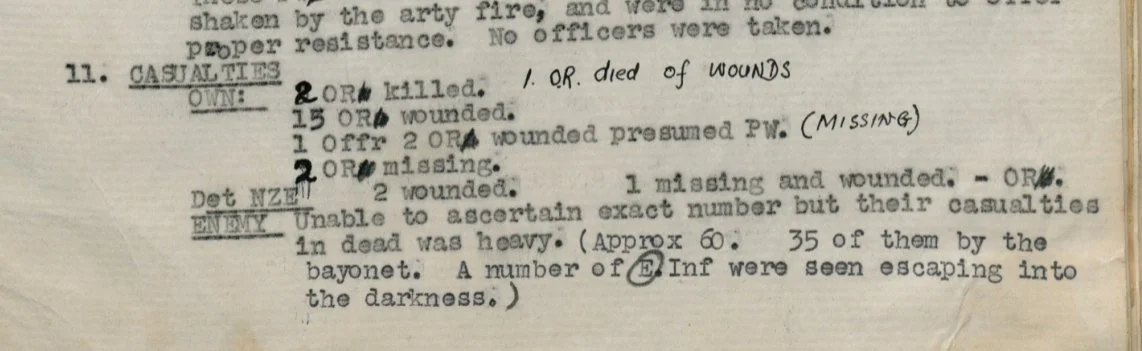
Photo from NZ archives document ‘Report on Operations’ for 25/26th Aug 1942
Presumably, Waaka is one of the ‘OR’ (Other Ranks; not in leadership) missing, or wounded, presumed PW. His date of capture is recorded as 26th August 1942.
He was taken to Görlitz, Nazi Germany, to a POW camp ‘Dulag VIII-A’. A Dulag is a transit POW camp though by 1942 the camp was far from transitory. There’s no record of how long he stayed in there, but the next location he was registered in was a camp in northern Italy: PG57, Gruppignano, in Undine.
As per a count from 31st May 1943, there were 1172 New Zealand soldiers at PG57 — most of the Australians and New Zealanders were sent here. The New Zealand Red Cross did an incredible job of sending parcels to the men - half a million parcels were sent every year of the war and included clothing, chocolate, tea, books and most importantly, cigarettes. There were sports, music groups and libraries as the men tried to find ways to pass the time. Letters were slow but could be received and sent. Christmas 1942 was reported by the men as unique and most seemed to be in good spirits - with Christmas parcels received, musicals being staged and sweets and biscuits were even given to them by the Italians.
In 1943, the British advanced into Italy. Some POW camps were liberated and some POWs managed to escaped, but most in the Italian camps were transferred over to German Camps. Waaka returned to Görlitz, to Stalag VIII-A.
The Auckland War Museum has a collection of fascinating pamplets full of POW letters and reports - you can read them all here.
Letters from POWs who had been moved talk about the change of diet from constant macaroni to never ending potatoes and they had been unable to bring any of their accumulated belongings from Italy so lacked warm clothing especially. The conditions in the camps change drastically too - along with the fact that the Nazi Germany camps were work camps.
In Pamphlet #19, Red Cross delegates visiting Stalag VIII-A in October 1943 report the following: “4,513 British and Imperial [Commonwealth] prisoners of war have been brought to this camp from Italy. 3,486 of them are in the main camp and the remainder are divided among eight work camps and are working in sugar beet factories…The camp is seriously overcrowded at present, but it is reported that almost all the prisoners will be sent to work camps.
Three-tier bunks are in use but many of the prisoners have to sleep on the floor. They have palliases [straw mattresses] but there is a shortage of blankets, and prisoners of other nationalities from other compounds of the camp have lent them in considerable numbers. Bathing and washing facilities are adequate.
Red Cross parcels had not been received up to the time of the visit, but sufficient had been borrowed from Stalag VIII B. The prisoners will build for themselves large stoves for private cooking. There is an infirmary in the camp where two British doctors attend to slight cases of illness. The infirmary suffers from lack of space but is well stocked with drugs.”
Stalag VIII-A was designed as a hub for work groups - men were sent to work in the fields or in the armaments industry. As time passed, overcrowding grew and there was no heating in winter. 1944 would have been a very tough year for Waaka.
In February 1945, with the threat of the Soviet army coming closer, the camp was evacuated and the soldiers forced onto the ‘Long March’, walking by foot across Germany in the freezing winter. You dont have to look far online to find pretty horrific documentation and accounts of these marches.
There were many routes taken, some camp populations broken into smaller groups, but the next stop in Waaka’s documentation is in Halle - about 250km from the camp.
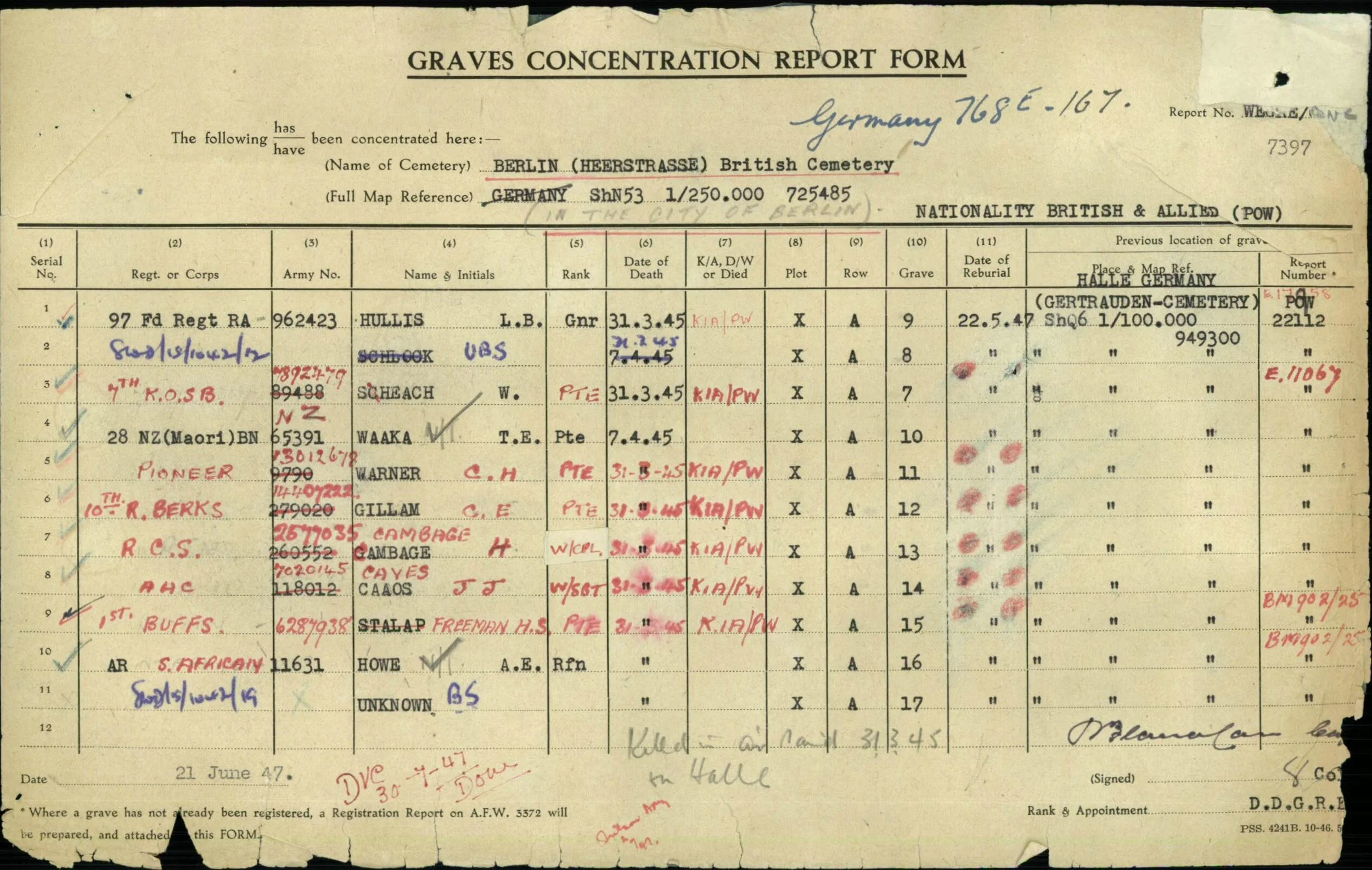
File from Commonwealth War Graves Archive, found on Te Waaka’s memorial Page
There in the fourth row. His date of death here is 7th of April but a later document amends it to 31st March 1945 and that is the date on his gravestone. Note the pencil writing at the bottom: ‘Killed in air raid 31.3.45 in Halle’. On the 31st of March, raids were carried out by the US 8th Air Force, targeting the railyards at Halle as a transport hub - the site was also, sadly, a POW transit centre. It seems likely that Waaka was in a transit centre with these eleven other men when it was bombarded.
Waaka was buried at Halle Cemetary, and then in 1947 shifted to the Berlin Commonwealth War Graves site where his gravestone is today. He died on the 31st of March 1945. And on the 17th April the Americans arrived in Halle by land. Just 17 more days and he may have made it home.
Te Maaka Waaka’s story is not unusual or extraordinary. It’s a war story. A story of a young man, like so many millions of other young men. But as my young son gets closer to military age, in a country that is growing it’s military and considering mandatory training, its a story that makes we want to cry and scream - what a waste, what a waste, what a waste.
Te Maaka Waaka - Online Memorial Cenotaph listing from the Auckland Museum